When Should OEMs Specify a Wiring Loom Instead of Separate Cable Assemblies?
As electrical systems become more complex, separate cable assemblies can become harder for OEM teams...
Read More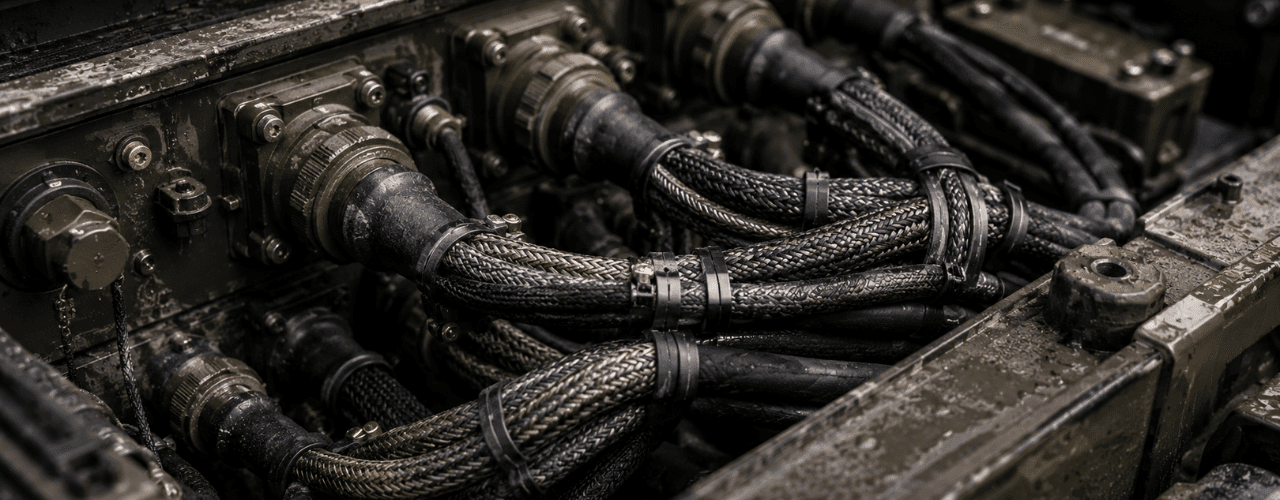
Defence infrastructure programmes place heavy emphasis on cable reliability since servicing disruption and equipment downtime can create operational pressure once assemblies begin degrading in the field.
Many defence infrastructure programmes need a British manufacturer capable of producing defence cable assemblies that continue performing consistently once equipment enters long-term deployment conditions.
Our defence manufacturing capability supports programmes requiring assemblies built for sustained operational use and demanding deployment conditions.
Cable assemblies remain under constant strain long after installation finishes. Vibration, contamination, heat cycling, and equipment movement gradually wear down insulation and connectors.
Most faults appear much later during servicing work. Connector movement, weak strain relief, and poor routing often create wear around mounting points and confined installation paths.
Procurement teams now focus far more on long-term connector stability and cable routing quality than clean test-bench results.
Many assemblies perform well during early inspection work but begin degrading later once vibration, servicing movement, and mounting pressure start affecting terminations. This is where assembly quality, routing control, and reinforcement standards become far more important than headline specification sheets alone.
Material choice directly affects long-term cable reliability.
Insulation must remain stable during repeated temperature changes, vibration, and long operating periods. Heat cycling near engines and power systems gradually weakens lower-quality materials.
Most material damage appears later during servicing work. Cracked insulation, connector wear, and corrosion rarely show up during early testing.
That is why many buyers work with manufacturers that understand how assemblies behave after deployment, not just during inspection and testing.
Many defence infrastructure programmes therefore work with British manufacturers like GEM Cable that understand how assemblies behave after deployment and during long-term operational use.
Repeatable assembly quality becomes increasingly important once systems remain in service long enough for connector wear, routing movement, and inspection pressure to begin affecting reliability. Our defence-sector manufacturing experience helps infrastructure providers source assemblies built for long-term deployment reliability under demanding operating conditions.
Sustained vibration and mechanical shock place continuous strain on cable assemblies operating across defence equipment and mobile platforms.
Unsupported cable sections move under vibration and place extra strain on connectors and terminations.
Outer cable protection alone cannot maintain long-term vibration resistance in defence environments.
Routing and strain relief both affect long-term cable stability. Poor routing near mounting points increases wear across assemblies and terminations.
Military specification cable often operates in high-vibration environments where connector movement creates long-term reliability problems.
Poor routing and weak reinforcement often create intermittent faults under continuous vibration. Fault tracing becomes far harder once systems enter service.
High-vibration environments also place constant pressure on mounting points, connector retention, and unsupported cable sections. Small amounts of cable movement can gradually create wear around terminations and increase long-term servicing pressure across deployed systems.
Our bespoke cable assemblies support high-vibration operational environments where electrical stability remains critical once equipment enters active service. Consistent assembly quality helps reduce instability later during servicing and inspection cycles.
Defence environments often expose cable systems to high levels of electromagnetic interference generated by onboard electronics, radar infrastructure, and adjacent electrical systems.
Without effective shielding design, electromagnetic interference gradually reduces signal stability across sensitive defence equipment operating under sustained load.
Defence standard cable performance requirements focus heavily on shielding effectiveness once assemblies operate alongside high-interference systems.
Many assemblies combine braided shielding and reinforced grounding to maintain signal stability in service.
Interference problems rarely appear during initial installation. They usually emerge later once repeated operational use and environmental exposure affect long-term electrical consistency.
Signal instability creates serious problems once systems enter active service. Stable shielding performance becomes critical in high-interference environments.
Shielding problems often appear gradually. Assemblies may pass early testing stages before interference begins affecting communications stability during long operating periods. Consistent grounding support and shielding quality both help reduce these long-term reliability problems.
Naval and outdoor environments place extra pressure on cable reliability because moisture and salt gradually damage exposed systems.
Defence standard cable for naval environments often operates across confined routing paths where limited ventilation and repeated maintenance access gradually increase wear across cable systems.
Moisture and salt exposure gradually damage connectors and shielding in marine environments.
Military cable assemblies often need moisture-resistant insulation, reinforced outer protection, and stable shielding.
Many programmes now prioritise assemblies that can withstand salt exposure, enclosure corrosion, and repeated connector movement during long naval deployment periods.
Outdoor and marine environments place constant pressure on shielding, connectors, and outer protection. Consistent manufacturing quality helps reduce long-term wear and replacement pressure.
Marine deployments often expose assemblies to repeated moisture exposure, enclosure condensation, and corrosion build-up around connectors and cable entries. These conditions gradually increase wear across exposed systems operating in confined outdoor environments.
Environmental testing helps defence infrastructure programmes identify how degradation affects electrical stability and structural reliability over time.
Defence standard cable environmental testing often evaluates how assemblies respond to vibration exposure, moisture ingress, and long-term structural wear once systems move into continuous field use.
Testing helps identify degradation patterns before systems move into long deployment periods where fault tracing and replacement work become significantly harder to manage.
Many defence programmes increasingly prioritise cable assemblies that maintain stable electrical performance across deployed service conditions with restricted maintenance access.
Our controlled manufacturing processes help defence infrastructure programmes maintain predictable assembly consistency across harsh deployment environments where later replacement work becomes significantly harder to manage.
Harsh operating environments place constant pressure on cable assemblies.
Vibration, contamination, heat cycling, and moisture gradually reduce electrical reliability over time. Most problems become far harder to trace after deployment.
Our bespoke cable assemblies support harsh environments where long-term electrical performance and consistent build quality remain critical.
Speak with GEM Cable about defence standard cable assemblies designed for high-stress operational environments and long-term electrical reliability.
Ready to talk cables, fibre or full network solutions? Get in touch with our team today, we’re here to help.