When Should OEMs Specify a Wiring Loom Instead of Separate Cable Assemblies?
As electrical systems become more complex, separate cable assemblies can become harder for OEM teams...
Read More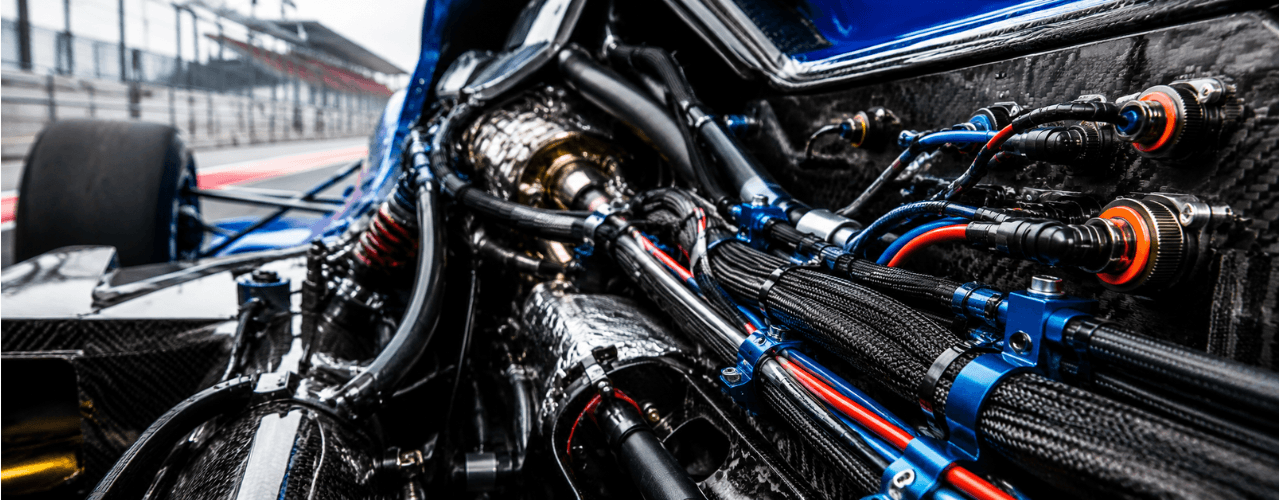
Motorsport cables operate under constant heat and vibration inside tightly packaged vehicle environments where unstable electrical behaviour quickly affects telemetry reliability and servicing time during testing and race preparation.
Heat from braking systems and engine vibration place continuous pressure on cable assemblies throughout vehicle operation. Limited chassis space also makes routing harder to manage once assemblies move close to suspension components, cooling systems, and removable body panels.
Motorsport cables used in high-performance racing environments need to withstand repeated thermal cycling and mechanical load without creating intermittent signal instability during rebuild work or track testing.
Race engineers rely on lightweight motorsport cable assemblies UK manufacturers can produce consistently for repeated testing and race preparation without creating unnecessary servicing delays.
GEM Cable supports motorsport applications through bespoke cable assemblies designed for heat exposure, vibration resistance, compact routing requirements, and reliable signal performance during repeated testing and race operation.
Cable assemblies routed close to exhaust systems and braking components operate under sustained thermal and mechanical stress throughout vehicle operation. In tightly packaged race vehicles, prolonged heat exposure gradually affects insulation stability and connector reliability once assemblies sit close to high-temperature mechanical systems.
Repeated vibration from kerbs, cornering load, and uneven track surfaces also affects unsupported cable sections over time. Small routing inconsistencies can quickly turn into wear problems once rebuild work and repeated testing cycles begin.
Packaging constraints increase that pressure further. Race engineers often route assemblies around cooling systems and moving suspension hardware where limited clearance restricts service access between sessions. Bespoke cable assemblies with controlled routing support help reduce unnecessary movement and make repeated servicing work easier during race preparation.
Vibration resistant motorsport cable assemblies also need to tolerate repeated thermal cycling without introducing intermittent faults during testing and race weekends.
Motorsport cable assemblies and motorsport cables move constantly throughout testing, transportation, rebuild work, and race operation. Over time, that stress accelerates fatigue across connectors, terminations, and unsupported routing sections.
In high-vibration environments, small routing inconsistencies gradually create larger reliability problems. Unsupported movement, repeated flexing, and abrasion against surrounding components increase wear rates across cable assemblies operating under continuous mechanical stress. Testing weekends and repeated rebuild work place additional strain on connectors and unsupported routing sections.
Heat resistant cable harnesses for motorsport applications also need to withstand material degradation caused by repeated thermal cycling and sustained engine bay exposure. Thermal cycling inside engine bays and braking environments repeatedly expands and contracts cable materials, gradually affecting insulation stability and connector reliability over long operating periods. Heat accumulation around connectors and shielding points also becomes harder to manage once assemblies operate inside tightly packaged engine compartments with limited airflow.
Electrical integration engineers place significant emphasis on strain relief design and routing control because small wiring faults quickly turn into difficult diagnostic problems during race preparation and testing. Application-specific assemblies with stronger strain relief support and controlled routing layouts help reduce repeated wear around connectors and unsupported sections.
Cable assemblies supporting motorsport applications often require:
Good strain relief control and abrasion protection reduce electrical instability and help engineers spend less time chasing intermittent faults between test sessions. Faster diagnostics and more predictable servicing also help motorsport programmes protect valuable testing time once race weekends become compressed.
GEM Cable supports motorsport applications requiring bespoke cable assemblies designed around vibration resistance, controlled routing support, and repeated rebuild conditions.
Cable assemblies routed close to braking systems, exhaust components, and tightly packaged power systems often operate under sustained thermal cycling throughout vehicle operation. In confined motorsport environments, prolonged heat exposure gradually affects insulation stability and connector reliability over time.
Higher temperatures accelerate insulation wear and place additional stress around connectors and termination points. Heat accumulation also becomes more difficult to manage inside confined packaging environments where airflow remains limited.
Race engineers need motorsport cables and cable assemblies that continue operating predictably close to high-temperature mechanical systems where airflow and service access remain limited.
Insulation materials and connector design heavily influence how assemblies cope with sustained thermal exposure.
Thermal problems become far harder to correct once packaging layouts and routing paths are already fixed.
Tightly scheduled testing programmes leave very little time for avoidable electrical troubleshooting once race preparation work begins. Delays caused by unstable signal behaviour or routing-related wear can quickly affect setup work, rebuild schedules, and track availability during critical development periods.
GEM Cable works with motorsport and performance vehicle programmes requiring lightweight, high-durability bespoke cable assemblies designed around confined routing conditions and repeated rebuild pressure. Speak with GEM Cable about assemblies developed for tightly packaged motorsport environments where setup time and servicing access remain critical.
Motorsport wiring for high performance vehicles often operates inside compact packaging layouts that leave very little space for cable routing inside many chassis environments. In tightly packaged builds, routing paths often need to work around cooling systems, firewalls, suspension movement, and removable body panels while still maintaining service access.
Routing decisions affect far more than physical installation. Tight routing paths increase abrasion risk, complicate panel removal during servicing, and place additional stress on assemblies operating close to high-temperature components.
Poor routing discipline also increases electromagnetic interference risk where power, telemetry, control, and sensor systems operate close together inside confined vehicle environments. In some builds, limited shielding separation creates intermittent signal instability that engineers struggle to reproduce consistently during diagnostics.
Motorsport engineers often need to balance:
Motorsport cable solutions for endurance racing need to withstand continuous vibration and thermal pressure across long operating periods without interruption.
Application-specific routing support reduces unnecessary movement and makes rebuild and servicing work easier to manage during race preparation. Controlled assembly layouts also help engineers maintain cleaner routing paths inside tightly packaged chassis environments, reducing the amount of rework required once vehicle packaging becomes fixed.
GEM Cable provides bespoke cable assemblies for motorsport programmes operating with limited chassis space, repeated rebuild schedules, and demanding routing conditions.
Electrical reliability affects setup work, diagnostics, and on-track consistency throughout motorsport operation.
Intermittent signal instability, damaged shielding, connector fatigue, and routing-related wear create difficult diagnostic problems during testing and race preparation. Faults that only appear under sustained vibration or thermal load consume valuable setup and diagnostic time during tightly scheduled test sessions. In demanding race environments, avoidable electrical issues can also place additional pressure on maintenance activity between sessions.
Modern motorsport vehicles rely heavily on telemetry and sensor data. Reliable signal performance helps engineers compare setup changes more confidently during testing and vehicle development. Consistent routing and shielding quality also reduce unnecessary diagnostic variation between rebuilds and repeated configuration changes.
Vehicle builders and electrical integration engineers increasingly look for custom motorsport cable assemblies for race cars that maintain consistent routing and reliable signal performance across repeated rebuilds and configuration changes. Motorsport cables that maintain stable signal quality under vibration and heat exposure help engineers reduce unnecessary troubleshooting, shorten diagnostic time, and maintain more productive testing sessions.
Motorsport applications place heavy emphasis on reliability under sustained thermal and vibration exposure. Engineers need manufacturers that understand how routing and packaging constraints affect assembly performance inside confined vehicle environments.
A durable racing cable harness manufacturer supporting high-performance vehicle applications should understand:
Manufacturing consistency matters during motorsport development programmes where assemblies need to maintain identical routing and reliable signal performance across repeated vehicle configurations. Repeatable assembly quality reduces unnecessary troubleshooting between rebuilds, setup changes, and replacement installations.
GEM Cable supports motorsport applications through bespoke cable assemblies designed around compact routing environments, vibration resistance, shielding stability, and high-temperature operating conditions. The company works with motorsport programmes where repeated rebuild pressure, limited packaging space, and long testing schedules place continuous demands on electrical reliability.
The company’s controlled manufacturing processes and application-specific assembly support help race engineers and vehicle builders reduce electrical instability during testing, rebuild work, and long-duration operating conditions. That support also helps motorsport programmes maintain more consistent preparation schedules once repeated rebuilds and configuration changes begin placing pressure on servicing time.
Motorsport electrical systems for high vibration operate under constant thermal exposure, vibration loading, and packaging pressure. Motorsport cables and cable assemblies need to maintain reliable signal performance throughout testing and race operation.
Routing quality, strain relief design, and manufacturing consistency all affect assembly reliability once vehicles begin operating under sustained vibration and heat exposure.
Race engineers and vehicle builders increasingly look for manufacturing partners capable of supporting lightweight cable assemblies designed around repeated rebuild pressure and tightly packaged chassis environments.
Speak with GEM Cable about bespoke cable assemblies designed for motorsport applications operating under high vibration, thermal exposure, and tightly packaged routing conditions.
Ready to talk cables, fibre or full network solutions? Get in touch with our team today, we’re here to help.