When Should an OEM Outsource Box Build Assembly?
OEMs may decide to outsource a complete build when several practical pressures begin to overlap....
Read More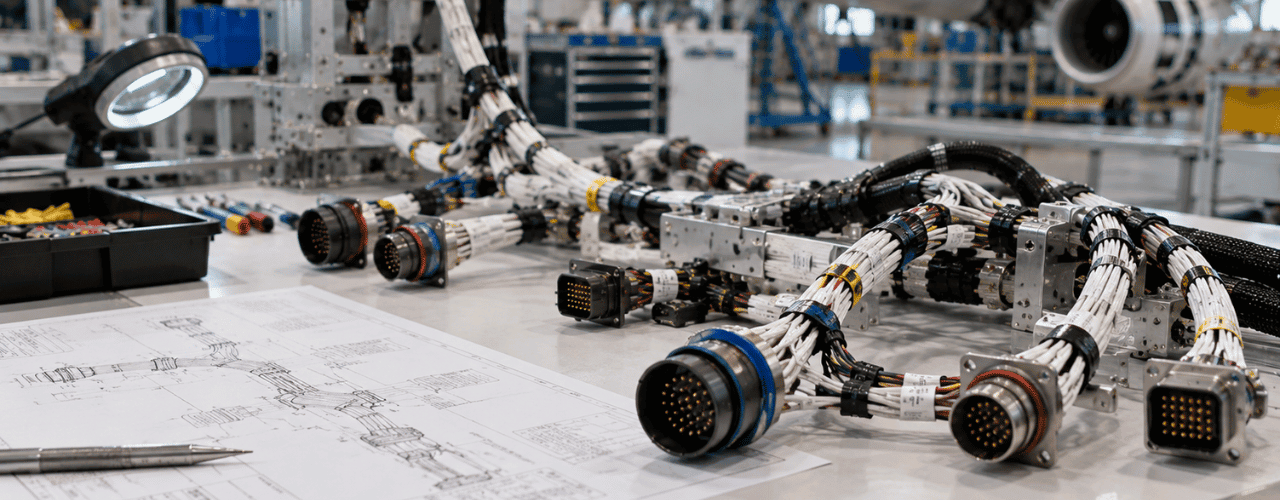
By the time an aerospace harness reaches inspection or acceptance, the drawing is only part of the evidence engineering and quality teams may need. The finished assembly may also need to be tied to the correct controlled revision and to the checks completed before release. Without that evidence, it is harder to show that the harness was built and checked as specified.
Traceability is what links the delivered harness to the controlled information used to build it. Depending on the programme, aerospace cable harness manufacturers may also need to provide evidence such as revision status, selected component records or test results.
At GEM Cable, we manufacture aerospace cable assemblies and aerospace harnesses in the UK within an AS9100D-certified quality management system. Every product we manufacture undergoes 100% Banair testing. If a programme calls for additional traceability or documentation, we can review those requirements against the drawing and specification before manufacture.
An approved drawing defines the harness configuration and the requirements captured on that document. Other controlled information may sit alongside it, such as specifications or build instructions. Together, these documents tell the manufacturer what needs to be built.
Before the harness can be accepted, the customer may also need evidence from the build itself. That could include confirmation that production used the correct released revision or that an agreed inspection was completed. That evidence is created during manufacture, which is why the drawing alone cannot provide it.
Aerospace cable harness manufacturers need revision control to keep approved design information aligned with production. The people building and inspecting the harness need to be working from the released revision for that order. If an approved change is introduced, it needs to reach production before the affected build is completed.
In practice, what matters is being able to tie the finished harness back to the controlled version used in production. That becomes especially useful when drawings change over time or the same harness returns for a repeat build.
If your aerospace harness has programme-specific traceability requirements, we can review the build information with you before manufacture and agree what evidence is needed.
The evidence aerospace cable harness manufacturers need to retain comes from the customer specification. That might mean component-level traceability for a selected cable or connector. It could also mean an inspection record showing that a defined workmanship or dimensional check was completed.
Certificates or batch references may also be required where the specification calls for them. For that reason, the evidence needs to be agreed before manufacture so the supplier can confirm what will be retained and supplied with the harness. There is no single aerospace documentation pack that applies to every build.
Electrical testing allows aerospace cable harness manufacturers to verify the characteristics defined by the test process. For a harness, that may include continuity or connection verification. If the customer needs a test record, that result can form part of the manufacturing evidence.
That test result has limits. It does not, by itself, confirm material identity or workmanship, and it does not demonstrate environmental performance. Those points need separate verification where the specification requires it.
At GEM Cable, every product we manufacture undergoes 100% testing on our Banair system. If the project calls for additional testing or records, those requirements need to be agreed against the assembly specification before manufacture.
AS9100-certified aerospace cable harness manufacturers operate within a quality-management framework that includes requirements relevant to configuration management, controlled production and traceability. In practice, this means manufacturing records and change control are handled within a defined quality system.
The certification does not prescribe one documentation pack for every harness, and it does not replace the customer’s specification. The programme still determines what evidence is needed for the assembly.
A useful manufacturing review starts with the information already available for the harness. Aerospace cable harness manufacturers need enough controlled information to understand the build and the evidence the programme expects at release. You do not need every detail resolved before starting the conversation, but the current drawing and known project requirements give the manufacturer a sound basis for review.
At GEM Cable, this information helps us separate standard manufacturing controls from project-specific requirements. We can review whether the build sits within our capability and where additional evidence needs to be defined before production.
The buyer does not need to arrive with a perfect documentation pack. What matters is that we understand what must be built and what the programme expects to see at release. If some information is still being finalised, we can review what is available and identify what needs clarifying before the manufacturing scope is agreed.
We manufacture bespoke cable assemblies and aerospace harnesses in the UK. That work sits within our AS9100D-certified quality management system, and every product we manufacture undergoes 100% Banair testing.
Our manufacturing capability includes a Class 8 cleanroom. We have also invested in IPC/WHMA-A-620 training for cable and wire harness assembly.
We also support high-reliability work in defence and space. The same need for controlled build information can arise in those sectors, although the exact evidence still depends on the application.
Even with those controls in place, the traceability package still needs to match the programme. If specific evidence is required, we can review it alongside the drawing and specification before the manufacturing scope is agreed. This gives both sides a clear understanding of what should be available at release.
Traceability requirements should be agreed before manufacture, while the production plan can still accommodate them. If the programme expects evidence beyond the finished harness, it needs to be clear from the outset what the manufacturer must record and retain.
This is particularly important when the customer needs component-level records, a defined test record or a particular retention period. Agreeing those points early allows the manufacturer to confirm what can be provided and whether any extra controls are needed.
If the requirement appears only after the harness has been built, the necessary record may not exist in the form the customer expects. That is why the evidence should be part of the manufacturing discussion, not an afterthought at release. Contact us before manufacture to discuss what your programme requires.
Ready to talk cables, fibre or full network solutions? Get in touch with our team today, we’re here to help.