When Should OEMs Specify a Wiring Loom Instead of Separate Cable Assemblies?
As electrical systems become more complex, separate cable assemblies can become harder for OEM teams...
Read More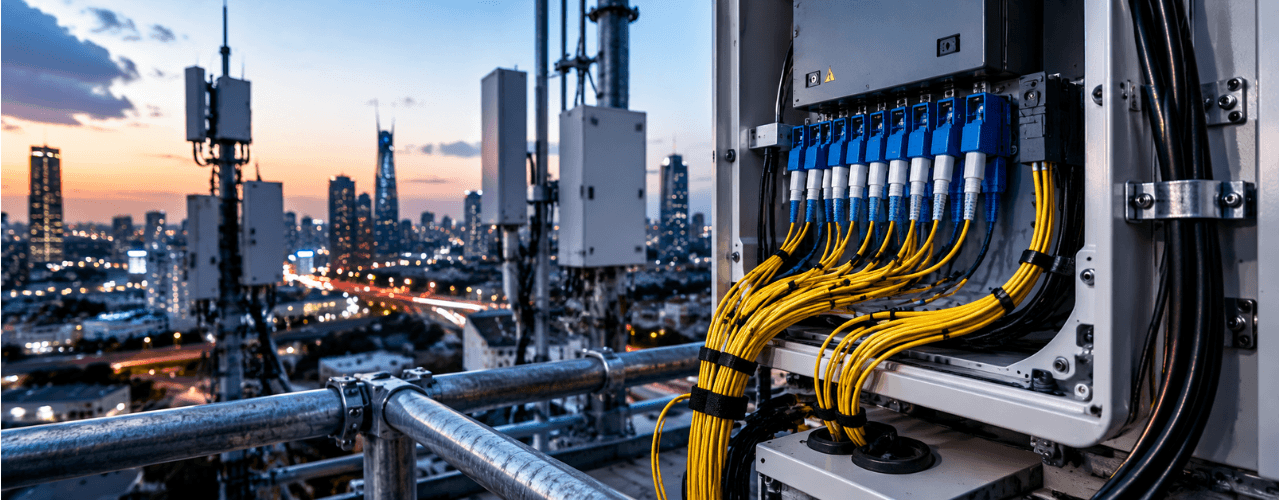
5G rollout is forcing telecom infrastructure providers to support far greater backhaul traffic across increasingly dense urban networks. Small-cell deployment increases connection density and places additional strain on fibre routing and cabinet access across existing telecom infrastructure.
Once rollout phases begin scaling, poorly planned fibre infrastructure can create deployment delays, difficult maintenance access, and expensive rework during future expansion phases. Contractors already work around congested duct routes and restricted cabinet space where additional infrastructure quickly reduces future upgrade flexibility.
Fiber optic cable manufacturers supporting 5G infrastructure increasingly design assemblies around deployment conditions and long-term network expansion instead of relying on generic telecom supply. Our telecoms sector experience helps providers manage dense rollout environments where upgrade flexibility quickly becomes limited.
We support telecom and infrastructure programmes requiring fibre assemblies built for dense urban deployment and long-term network growth. Many fiber optic cable manufacturers still struggle to support rollout environments where upgrade flexibility and future expansion remain ongoing concerns.
5G networks rely on denser infrastructure than previous telecom generations. Increased small-cell deployment creates far more connection points across urban environments and pushes far heavier bandwidth demand through backhaul networks.
That congestion becomes difficult to manage once existing duct routes and cabinet systems begin operating close to capacity. In many deployment environments, contractors already work with very little spare routing space for future expansion.
As rollout density increases, fibre backhaul infrastructure needs to support heavier traffic loads without creating upgrade problems later.
Once rollout schedules begin slipping, installation and commissioning work can quickly compress into narrower deployment windows across live network environments. Telecom providers increasingly prioritise fibre assemblies that help contractors avoid disruption during later expansion work.
Poor fibre infrastructure planning often forces providers back into already congested infrastructure later in deployment programmes. Difficult maintenance access and inconsistent routing layouts increase retrofit cost once network density continues expanding.
We work with telecom providers that need fibre assemblies built for long-term rollout continuity and fewer upgrade complications once infrastructure density increases.
We also support telecom infrastructure providers running demanding 5G rollout programmes where delayed upgrade work or repeated infrastructure re-entry can quickly affect deployment schedules.
Small-cell deployment quickly creates installation problems once providers begin scaling fibre infrastructure across dense urban environments. Contractors already work around restricted cabinet space and congested duct routes where additional deployment density can make future upgrade work significantly harder.
Tight installation paths increase bend sensitivity once assemblies move through restricted routing environments. Repeated access work during later expansion phases also increases long-term wear across outdoor infrastructure.
Many telecom providers now prioritise fibre assemblies that reduce future rework once deployment density increases across the same infrastructure footprint. Providers increasingly prioritise scalable fibre infrastructure earlier because reopening dense urban infrastructure later often creates additional civils work and deployment delays.
That is why we support telecom infrastructure programmes with bespoke fibre assemblies designed for dense routing environments and outdoor deployment conditions that help reduce future rollout disruption.
Fiber optic cables for 5G base stations often operate within:
Poor installation planning can create future maintenance disruption once rollout density increases across urban telecom infrastructure. Many providers already operate with very limited expansion space inside existing duct infrastructure.
Durable fiber optic cables for outdoor 5G deployment help telecom providers reduce maintenance disruption once additional rollout phases begin scaling across the same infrastructure footprint.
5G traffic growth places continuous strain on backhaul infrastructure as telecom providers maintain low-latency performance across increasingly dense network environments.
As traffic demand increases, providers need fibre infrastructure capable of maintaining stable performance across expanding network environments.
Network providers increasingly prioritise low latency fibre optic cable for telecom networks once traffic demand increases across urban deployment environments.
Signal attenuation and splice reliability both affect long-term network performance across heavily utilised backhaul routes. Small infrastructure inconsistencies can quickly create larger upgrade and maintenance problems once additional network density enters the same routing environment.
Many telecom providers now prioritise scalable fibre assemblies because reopening congested infrastructure later often creates additional civils work and more disruptive upgrade activity. This is why it is so crucial to support providers looking to reduce expansion friction before rollout density creates more expensive upgrade problems.
Dense 5G infrastructure often leaves very little room for fibre routing inside cabinet systems, underground containment routes, and outdoor telecom enclosures.
Contractors frequently work around existing infrastructure where additional fibre density quickly reduces service accessibility and increases installation complexity during future rollout phases.
Poor routing discipline can create attenuation problems once fibre assemblies move through tight bend radius environments or congested containment systems.
Routing problems also create long-term maintenance difficulties. Congested cabinet environments and restricted access routes make future upgrades significantly harder once infrastructure expansion continues across the same deployment areas.
Installers working within dense urban environments often need to balance bend radius protection with future maintenance accessibility.
Custom fiber optic cable assemblies for telecom networks help contractors maintain cleaner routing layouts once installation environments become more congested during later deployment phases.
We deliver bespoke fibre optic assemblies for confined telecom routing environments where installation access and bend management remain critical. This helps infrastructure providers reduce upgrade friction once cabinet density and routing congestion continue increasing.
Telecom infrastructure contractors increasingly look for fiber optic cable manufacturers capable of supporting deployment efficiency and scalable network expansion across multi-phase rollout environments. Providers increasingly prioritise fiber optic cable manufacturers that understand rollout continuity and long-term infrastructure growth rather than standard component supply alone.
Infrastructure providers now operate under growing deployment strain to complete rollout work quickly while maintaining network reliability and future upgrade flexibility.
That increases demand for fibre assemblies that contractors can deploy consistently across large rollout programmes. Providers increasingly look for suppliers that can maintain installation consistency when deployment schedules leave very little room for delayed commissioning work or future rework.
Contractors increasingly prioritise manufacturers that understand rollout sequencing, routing constraints, and future expansion pressure rather than simply supplying fibre components.
Fiber optic cable suppliers for 5G rollout programmes often support dense urban deployment schedules and long-term infrastructure expansion across multiple sites.
We support telecom infrastructure programmes through bespoke fibre assemblies designed around deployment practicality and outdoor durability. Many providers prioritise tighter routing control and cleaner installation consistency once rollout programmes begin expanding across multiple locations.
Our controlled manufacturing processes and application-specific assembly support help infrastructure contractors reduce installation inconsistency and maintain more predictable deployment schedules during large-scale rollout programmes.
Speak with GEM Cable about bespoke fibre optic assemblies designed for telecom infrastructure operating under high-capacity backhaul demand and dense urban deployment pressure.
Telecom infrastructure providers increasingly design 5G networks around long-term expansion rather than immediate deployment requirements alone.
Future network densification and rising bandwidth demand increase strain on existing fibre backhaul infrastructure once rollout programmes continue scaling.
Infrastructure providers that overlook future scalability often face saturated duct routes, restricted upgrade access, and expensive retrofit work once rollout density increases.
Future expansion becomes significantly harder once urban infrastructure routes become fixed and access conditions become more restricted.
High capacity fiber optic cable assemblies built around future scalability help telecom infrastructure programmes avoid expensive retrofit work during later rollout phases. Many providers now prioritise fibre infrastructure that supports long-term network growth without creating avoidable disruption later.
We support telecom providers and infrastructure contractors through bespoke fibre assemblies designed for long-term infrastructure expansion. That approach helps providers plan for long-term growth without creating unnecessary rework later.
5G rollout continues increasing strain on fibre backhaul infrastructure as telecom providers expand network density and push for lower latency across demanding urban environments.
Fibre assemblies supporting 5G infrastructure now operate within tighter routing environments and harsher outdoor deployment conditions while maintaining reliable long-term signal performance.
Telecom infrastructure providers increasingly look for fiber optic cable manufacturers capable of supporting scalable deployment and future network expansion without creating unnecessary infrastructure disruption later.
Speak with GEM Cable about bespoke fibre optic assemblies designed for high-capacity telecom infrastructure and dense urban deployment environments.
Ready to talk cables, fibre or full network solutions? Get in touch with our team today, we’re here to help.